Biodiversity and Your Health: Connections You Need to Know
Have you ever wondered how the variety of life around you (the plants, animals and microbes) can influence your health and happiness? Growing research sheds light on this fascinating connection, showing that biodiversity, or the variety of life in a given environment, is deeply intertwined with our physical and mental wellbeing.
After all, we emit biodiversity; we inhale and ingest biodiversity; we are biodiversity.
The Bigger Picture: Nature’s Healing Powers
We already know that spending time in green spaces (like parks) and blue spaces (like lakes and rivers) is good for our health. It reduces stress, boosts mood and even strengthens social bonds. But researchers are taking it a step further, exploring how biodiversity itself plays a role in these benefits. Our lab published a review on this very topic. The findings? It’s about the quality and variety of life in those green and blue spaces.
THREE Ways Biodiversity Impacts Your Health
Microbes for a healthy immune system
Think of biodiversity as your personal health ally. When you interact with diverse natural environments, through soil, plants or air, you encounter beneficial microbes and organic compounds that help regulate your immune system. This ‘environmental microbiome’ might reduce inflammation and protect against allergies and autoimmune diseases.Stress relief and mental clarity
Did you know that the variety of plants, animals, smells and sounds in a biodiverse environment can amplify the calming effects of nature? Studies show that biodiversity boosts feelings of wellbeing and restores attention more effectively than in less diverse settings. Also, I’ve written before about the multisensory experience of engaging with natural environments and how I think it shapes your gut microbiome indirectly as well as potentially directly through colonisation (see other Brain Fuel blog posts).Cleaner air, cooler cities
Sure, trees and plants look pretty, but they also actively improve air quality by filtering pollutants. A mix of species can also cool urban areas more effectively, reducing the risks of heat-related illnesses. Our research and that of others have also shown that more trees and shrubby vegetation in urban areas can increase the diversity of microbes in the air (generally considered a good thing) and reduce the relative abundance of potential pathogens.
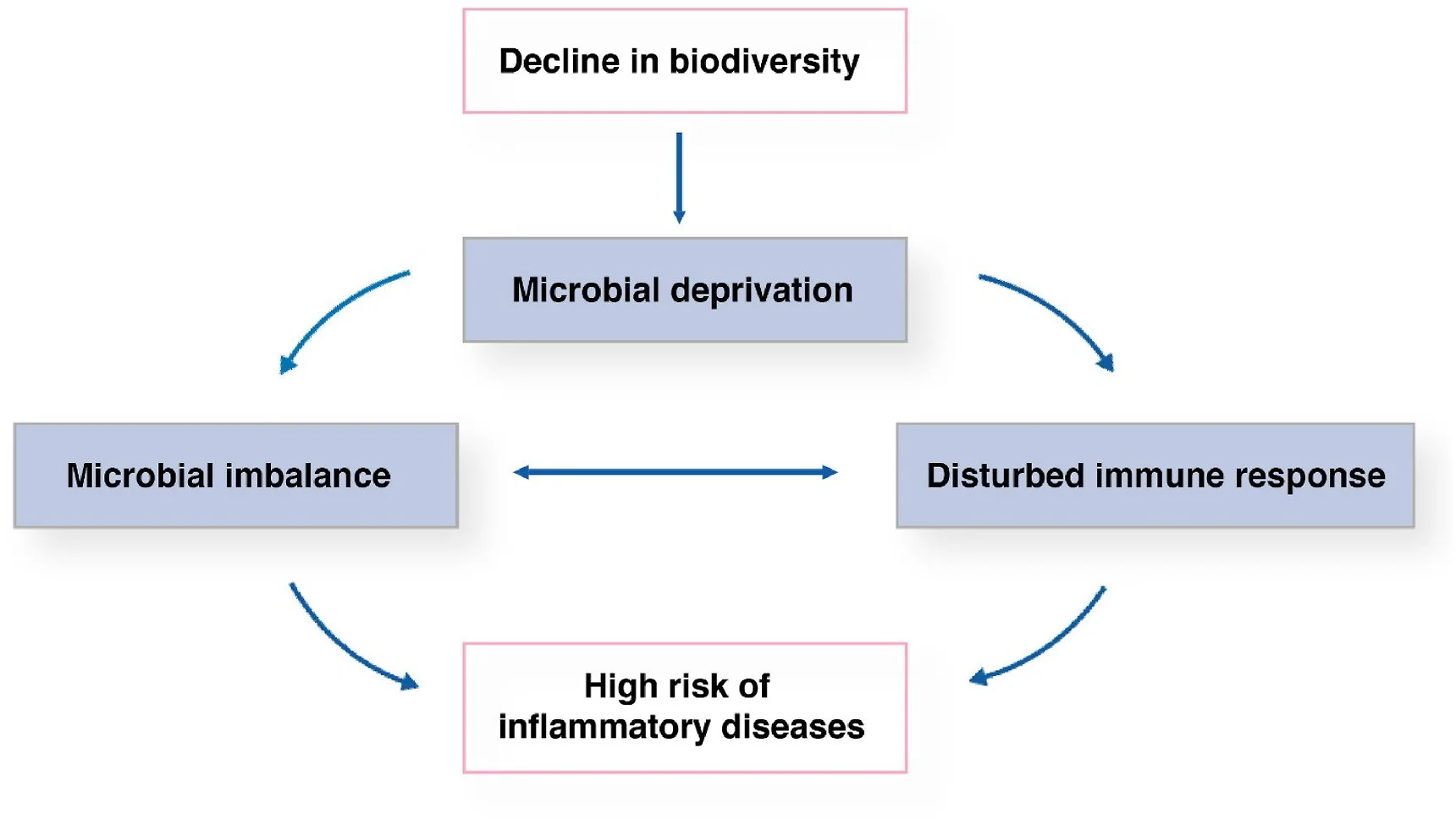
The biodiversity hypothesis suggests that a decline in biodiversity is leading to an explosion in immune disorders.
Spotlight on underrepresented links
While most studies focus on general health benefits, our research highlighted three often-overlooked connections:
Indigenous health and biodiversity
Indigenous Peoples, who steward much of the world’s biodiversity, often experience profound health benefits from their interconnections with the land. Protecting these ecosystems is vital for conservation, but it’s also critical for Indigenous health and cultural resilience. Indigenous languages are also deeply tied to biodiversity. Therefore, conserving and restoring nature also protects these fragile languages. Many languages, much like species, are currently going extinct at an unprecedented pace and need protection. When cultures are threatened, so is health.Urban biodiversity and social equity
Cities rich in biodiversity can improve mental health and social cohesion, but marginalised communities often face barriers to accessing these benefits. Creating inclusive, biodiverse urban spaces is a win-win for people and the planet. Addressing this inequity is a public health issue. Rich, biodiverse environments can alleviate stress, promote physical activity and build stronger communities.Biodiversity and COVID-19
Healthy ecosystems might reduce the risks of infectious diseases. Biodiversity loss is a health crisis. Destroying natural habitats can increase our exposure to zoonotic diseases (those that jump from wild and domestic animals to humans), like COVID-19. Protecting biodiversity could help prevent future pandemics. It’s also about keeping disease vectors (i.e., the animals that carry the pathogens) healthy and not stressed. Stressed wild animals can shed viruses more easily, which spells trouble for us. Check out The Nature of Pandemics book for more insights.
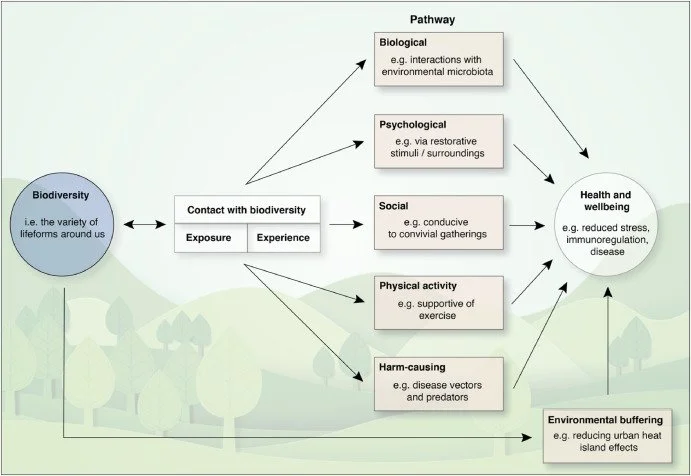
There are multiple pathways linking biodiversity to health.
What Can We Do?
Understanding the links between biodiversity and health opens the door to actionable solutions:
‘Rewild’ cities and reduce stress on wildlife
Incorporate features like native plants, green roofs and urban wetlands to promote biodiversity in urban areas - contact your local wildlife or environmental organisation to see how you can help.
Engage with nature
Regularly visit biodiverse spaces, from local parks to nature reserves, to boost your exposure to health-promoting microbes and other organisms, and nurture that multisensory experience.
Advocate for equity
Support policies that ensure everyone has access to biodiverse environments, regardless of their socioeconomic status.
Closing Thoughts
Personally, I think biodiversity has intrinsic value. But it’s also instrumental to our survival. From immune health to mental wellbeing, the variety of life on Earth shapes our quality of life in ways we’re only beginning to understand. Protecting and restoring biodiversity is also a human imperative.
Pause to appreciate the diversity of life around you. Nourishing that connection to (the rest of) nature might just be the most profound investment in your health.
See our paper here - it’s open access :-)
Also, subscribe to the Nature. Gut. Brain. YouTube channel to learn more: https://www.youtube.com/@naturegutbrain
Check back for more science untangled on the Brain Fuel blog.